FacePhys: Remote Vital Signal Monitoring
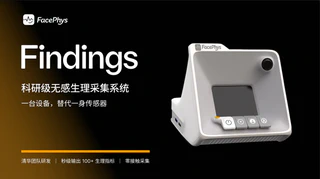
A camera-based technology for contactless measurement of heart rate, HRV, and other vital signs from facial videos.
Overview
FacePhys leverages remote photoplethysmography (rPPG) technology to extract physiological signals from subtle color changes in facial skin caused by blood flow. This non-contact approach makes health monitoring accessible using everyday devices like smartphones, webcams, and surveillance cameras.
Key Features
- Universal Camera Support — Works with any standard RGB camera without specialized hardware
- Multiple Vital Signs — Measures heart rate, HRV, respiration rate, and blood oxygen saturation
- Real-time Processing — Enables continuous monitoring with low latency
- Robust Algorithms — Handles various lighting conditions, skin tones, and motion artifacts
- Open Source Toolbox — Comprehensive research and development framework
Technology
FacePhys employs advanced deep learning models and signal processing techniques to:
- Detect and track facial regions of interest
- Extract subtle color variations from video frames
- Filter noise and motion artifacts
- Reconstruct physiological waveforms
- Compute vital sign metrics
Applications
- Healthcare Monitoring — Remote patient monitoring and telemedicine
- Fitness & Wellness — Stress assessment and exercise tracking
- Human-Computer Interaction — Emotion recognition and adaptive interfaces
- Research — Physiobehavioral computing studies
Try It Yourself
Experience FacePhys technology in action with our interactive demo:
The demo runs entirely in your browser and uses your webcam to measure your heart rate in real-time. No data is uploaded or stored.
Resources
- FacePhys Website — Project homepage and documentation
- Research Findings — Latest research results and publications
- rPPG Toolbox — Deep learning toolbox for rPPG research
- MMPD Dataset — Multi-modal physiological dataset
- FacePhys Demo — Interactive demonstration source code
Impact
FacePhys technology has been published in top-tier conferences and journals, contributing to the advancement of contactless health monitoring and physiobehavioral computing research.
