Human Computer Interaction (HCI) Technology
·
2 min read
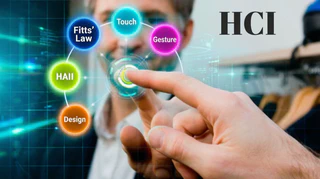
Foundation in HCI covering human abilities, natural interaction, and human-AI collaboration for designing efficient, user-friendly systems.
Course Overview
This course explores the key goals of Human-Computer Interaction: interaction efficiency and interface naturalness. Students learn to integrate interdisciplinary knowledge to solve real-world interaction design problems and enhance user experience.
Topics Covered
- Human ability analysis and cognitive models
- Natural interaction techniques
- Human-AI interaction
- User experience design
- Interaction efficiency optimization
- Interface design principles
Course Schedule
| Week | Topic | Content |
|---|---|---|
| 1 | Course Introduction | Course overview, learning objectives, assessment methods, innovation project introduction, team formation and requirements |
| 2 | HCI History & Human Perception | Evolution of HCI paradigms, human perception, cognition and motor mechanisms, impact of human capabilities on interaction design |
| 3 | Design Thinking & Interaction Design | Design thinking methodology, user needs analysis, scenario modeling, user-centered design principles |
| 4 | Innovation Project Proposal | Student team presentations of initial project ideas, problem definition and target users, class feedback and discussion |
| 5 | Human Information Processing | Perception-cognition-action model, behavioral information abstraction, implications for interaction design |
| 6 | Fitts’ Law & GUI | Fitts’ Law and interaction efficiency models, pointing and selection task analysis, interface performance evaluation |
| 7 | Sensing Technologies I | Resistive and capacitive sensing principles, touch and proximity interfaces, devices and applications |
| 8 | Sensing Technologies II | Physiological and behavioral signal sensing, sensing methods and technologies, wearable interaction applications |
| 9 | Gesture Interaction | Gesture and body motion as input modalities, motion recognition and interaction mapping, multi-scenario applications |
| 10 | Innovation Project Design Review | Design proposal presentations, interaction and sensing technologies, feasibility analysis and feedback |
| 11 | Holiday Break | University celebration and May Day holiday |
| 12 | Text Input Methods | Text input technology classification, keyboard, touch and voice input, input design for different scenarios |
| 13 | Accessibility Design | Accessibility design principles, addressing diverse user needs and accessibility requirements |
| 14 | Innovation Project Progress Report | Progress presentations, technical implementation and results, comprehensive project feedback |
| 15 | Human-AI Interaction | Human-AI interaction design principles, natural language interfaces and intelligent recommendations, AI applications and human-machine collaboration |
| 16 | Final Project Presentations | Final project demonstrations, design rationale and technical implementation, course summary and comprehensive review |

Authors
Associate Professor (Research Track)
Yuntao Wang’s research centers on physiobehavioral computing and
intelligent interaction for mobile and wearable systems. His work
focuses on (1) developing robust, efficient sensing that performs
reliably on mainstream devices, (2) extracting spatiotemporal patterns
from multimodal signals to infer interaction intent by leveraging
natural behavioral correlations, and (3) designing edge-efficient interfaces
that deliver high performance on mobile and wearable platforms.
He has published 90+ papers, received 10 international conference awards,
and holds 30+ granted patents. His contributions have been
recognized with honors including the Wu Wenjun AI Outstanding Youth
Award (2024), the CAST Young Elite Scientists Sponsorship Program (2022),
the Qinghai High-Level Innovation & Entrepreneurship Leading Talent (2024),
and the First Prize of the China Electronics Institute Science & Technology Award (2019).